How to Set Boundaries Without Feeling Guilty
You set a boundary. You said it kindly. You even meant it. Then the guilt hit like a wave, and within an hour you were drafting an apology text. If that is you, nothing is wrong with you. Guilt after a boundary is one of the most common experiences I see in my coaching practice, and it is one of the most misunderstood.
Here is the short version. Guilt shows up when you break an old rule. It does not mean you did something wrong. You can feel the guilt and keep the boundary anyway, and the guilt gets quieter every time you do.
Why Do I Feel Guilty When I Set a Boundary?
Most of the women I work with learned very young that their job was to keep everyone else comfortable. They were the easy ones. The helpers. The kids the parents bragged about because they never caused trouble.
I was that child too. My clearest memory of it is from confession. I was a little girl in a wooden booth, panicking because I could not think of anything bad enough to confess, so I borrowed one of my older brother's sins. I was already trying so hard to do it right that I did it wrong. That is what guilt can look like when it was never really about wrongdoing.
When you grow up like that, a rule gets installed deep in your body: their comfort comes first. So the first time you put your own needs on the table, your system reads it as danger. Guilt is the alarm.
Guilt and shame feel similar but work differently
Guilt says, "I did something bad." Shame says, "I am bad." After a boundary, many women feel a blend of both. The guilt tells them they hurt someone. The shame tells them they are selfish for having needs at all.
Naming which one you are feeling helps. If you can point to something you actually did that caused harm, you can repair it. If what you did was tell the truth about your limits, the feeling is coming from an old script.
Signs Your Guilt Is Coming From People-Pleasing
Real guilt points to real harm. People-pleasing guilt points to a rule you were taught. Here is how to tell the difference:
- You feel guilty even though you were kind and clear.
- The guilt is far bigger than the situation.
- You want to explain yourself over and over.
- You feel responsible for how the other person feels about your boundary.
- You start doubting whether your need was even real.
- You feel an urgent pull to undo it and make things "normal" again.
One client put it beautifully after a few months of work together. She described finally feeling, for the very first time, that she did not have to people-please to feel good inside. That shift is available to you too. It starts with understanding that guilt is a feeling and a terrible decision-maker.
How to Set Boundaries Without Guilt Running the Show
I want to be honest with you. I cannot promise you a guilt-free boundary at the beginning. What I can promise is that you can stop letting guilt make your decisions. These are the steps I walk clients through.
1. Decide before the conversation
People-pleasers make their worst decisions in real time, with someone's face in front of them. Decide what your boundary is while you are calm and alone. Write it down if it helps. When the moment comes, you are delivering a decision you already made.
2. Keep it short
The more you explain, the more room you leave for negotiation. One or two sentences is plenty. "I'm not able to host this year." "I won't be answering work texts after 6." Kindness lives in your tone. It does not need a paragraph of justification.
3. Expect the guilt and name it
When the guilt comes, say it to yourself: "This is guilt. I am breaking an old rule." That one sentence moves you from inside the feeling to observing it. You can watch a wave without being dragged under.
4. Let your body process it
Guilt is physical. It lives in a tight chest, a hot face, a dropping stomach. Take three slow breaths with a longer exhale than inhale. Put a hand on your chest. Go for a walk. Give the feeling somewhere to move so it does not get stuck in your head as a story.
5. Do not fix their feelings
Someone may be disappointed by your boundary. That is allowed. Their disappointment is theirs to feel and work through. You can care about them and still let them have their own reaction without rushing in to repair it.
6. Collect evidence
After each boundary, notice what actually happened. Most of the time, the catastrophe you braced for never comes. The relationship survives. Sometimes it gets stronger. Each small boundary teaches your body that you are safe, and that evidence is what eventually turns the alarm down.
What If They Get Upset?
Some people will. Especially people who benefited from your old version.
When you stop performing, the people who were comfortable with the performance will feel the shift. Some will adjust. Some will push back to get the old you back. A few may drift away. I know that can feel unbearable, so let me say this plainly: a relationship that only works when you abandon yourself was never as safe as it felt.
I learned this the hard way when I came out later in life. A friend I expected to celebrate me quietly pulled away. A relative I had braced for surprised me with love. You cannot predict how others will respond to your truth. What you can decide is how and when you keep telling it.
Boundaries Are an Act of Love
Many people-pleasers believe boundaries are selfish. I believe the opposite.
When you can say no, your yes finally means something. The people in your life can trust it. They know you are there because you want to be. And you stop paying for every yes with quiet resentment, the kind that eventually leaks out as snapping, withdrawing, or burnout.
Boundaries protect your relationships from the slow erosion of resentment. They are one of the most loving things you can offer the people you care about, and yourself.
A Simple Boundary Practice for This Week
Choose one low-stakes situation where you usually say yes on autopilot. Before it comes up, decide your answer. When it happens, say your sentence, then stop talking. Notice the guilt. Name it. Breathe through it. Write down what actually happened afterward.
Do this a few times and you will feel the difference. The guilt does not vanish overnight. It does shrink. And one day you will set a boundary and realize the wave never came.
This is the heart of my work with women who are ready to stop abandoning themselves. If you want to understand the pattern underneath the guilt, read what people-pleasing really is and where it comes from. If you keep caving even when you know better, here is why, and a daily practice that helps.
You Do Not Have to Do This Alone
There is no single right way to do this work. Some women find what they need with a coach, some with a counselor or therapist, and many use a combination. If you would like support from me, you can explore coaching. If you are in crisis, please call or text 988 (in the U.S.) any time.
This article is educational content and is not medical or mental health treatment. If you are in crisis or need clinical care, please contact a licensed professional.
Common Questions About Boundaries and Guilt
Is it normal to feel guilty after setting a boundary?
Yes. Guilt after a boundary is very common, especially for people who grew up being rewarded for keeping others happy. It usually signals that you are breaking an old rule, and it fades as your nervous system learns that saying no is safe.
How do I stop feeling guilty for saying no?
Expect the guilt, name it, and let your body process it with slow breathing or movement. Keep your no short, avoid over-explaining, and notice what actually happens afterward. Repeated evidence that you are safe is what reduces the guilt over time.
Are boundaries selfish?
No. Boundaries make your yes trustworthy and protect relationships from resentment. They allow you to care for others from a full place.
Is guilt a sign I did something wrong?
Not always. Real guilt points to a specific harm you can repair. Guilt that shows up after you kindly state a limit usually means you broke an old rule, often one learned in childhood, and it fades as you keep practicing.
Find out where you are abandoning yourself
Take the free assessment and see your people-pleasing and boundary patterns.
Take the Assessment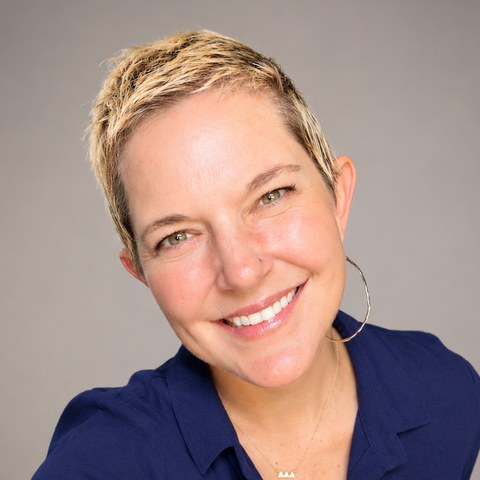
About Annie M. Henderson
Annie is a life coach, five-time author, podcast host of The Liberated Lesbian Lounge, and Expert Facilitator in RIM. She holds a BA in Psychology from Austin College and master's degrees in Education, School Counseling, and Professional Counseling. She spent 15 years in public education as a teacher and school counselor and was previously a Licensed Professional Counselor. She helps women break free from people-pleasing and build boundaries that hold, and shares this work with 118K+ followers on TikTok.
Annie is also the author of Later in Life Lesbian, Women with ADHD, Boundaries in Ink, The Liberation Year, and The Liberation Year Journal. Find her books on Amazon.