Top-Down vs. Bottom-Up Healing: Why Your Body Needs to Be Part of the Work
Top-down healing starts with the thinking mind: insight, reframing, and talking things through so the body eventually follows. Bottom-up healing starts with the body: breath, sensation, and movement, so the mind eventually follows. Both matter. Most women I work with have spent years on top-down work and still feel stuck, because their patterns live in the body. Pairing the two is where real change tends to happen.
What Is Top-Down Healing?
Top-down approaches work from the brain's thinking, language-based systems. They help you understand what is happening and choose a different response. Examples include:
- Talk therapy and counseling
- Cognitive reframing and challenging unhelpful thoughts
- Journaling and reflection
- Coaching, goal setting, and boundary planning
- Learning the psychology behind your patterns
Top-down work is valuable. It gives you language for your experience and a map for where you want to go. I spent 15 years in public education as a teacher and school counselor, and I hold a BA in Psychology from Austin College plus master's degrees in Education, School Counseling, and Professional Counseling. I believe deeply in this work.
The benefits of a top-down approach
- It helps you name and understand your patterns.
- It gives you practical tools and scripts for daily life.
- It helps you make meaning of your story.
- It supports clear decision-making and planning.
- It helps integrate body-based breakthroughs so they last.
What Is Bottom-Up Healing?
Bottom-up approaches start with the body and the older, faster parts of the brain that handle sensation, emotion, and survival responses. They help your nervous system feel safe enough to change. Examples include:
- Breathwork, including 9D Breathwork
- Somatic practices and body awareness
- Movement, shaking, and dance
- Guided imagery and body-based methods like RIM
- Grounding through the senses
The benefits of a bottom-up approach
- It reaches patterns that formed before you had words.
- It helps release emotion that has been stored in the body.
- It calms the nervous system directly.
- It can create shifts when insight alone has stalled.
- It helps you feel safe, rather than only knowing you are safe.
Why Insight Alone Often Is Not Enough
Here is what I hear all the time. "I know exactly why I do this. I can explain my whole childhood. And I still say yes when I mean no."
That makes complete sense. Survival patterns like people-pleasing, freezing, and fawning run on fast, automatic systems. They fire before your thinking brain has time to weigh in. You can know you are allowed to say no and still feel your heart pound when you try.
Researchers studying RIM, a body-based method I facilitate, describe this same problem. In their 2025 study, they noted that simply talking about a painful memory often fails to unlock it from analytic processing, so symptoms do not change. During RIM sessions, their EEG readings showed activity shifting toward brain regions linked to intuitive, nonconscious processing, then integrating with the thinking regions at the end.
That pattern, body first and meaning after, is the heart of bottom-up work.
How Breath Changes the Nervous System
Breath is one of the most direct bottom-up tools you have. A systematic review of slow-breathing research found it was associated with greater heart rate variability and with reduced anxiety and arousal. In a 2023 randomized study from Stanford, five minutes a day of structured breathing for a month improved mood, and a practice emphasizing long exhales reduced breathing rate more than mindfulness meditation did.
9D Breathwork builds on the breath with immersive, multi-layered sound and guidance designed to keep you in your body and out of your thinking mind. The women I work with often describe a release they could never talk their way into: tears, shaking, laughter, and then a deep calm.
Why the Best Results Come From Both
Bottom-up work moves the pattern. Top-down work helps you understand and keep the change. In my practice, I combine them on purpose:
- 9D Breathwork or RIM to reach the body and release what is stored there
- Coaching to make meaning, build boundary skills, and plan real-life changes
- Daily practices like breathing, journaling, and keeping small promises to yourself, to reinforce new patterns
Body work without integration can leave you flooded and unsure what to do next. Talk without the body can leave you informed and unchanged. Together, they close the gap.
Signs You Might Need More Bottom-Up Work
- You have done years of therapy and a pattern keeps returning.
- You feel emotion in your body that will not budge, like a tight chest or a lump in your throat.
- You understand your triggers and still react automatically.
- You feel numb or disconnected from your body.
- Your mind is calm about something and your body is still anxious.
A Simple Bottom-Up Practice to Try Today
Sit comfortably. Breathe in through your nose. At the top, take a second small sip of air. Then exhale slowly through your mouth, longer than the inhale. Repeat for five minutes. Notice what changes in your shoulders, jaw, and belly.
Then try one top-down step: write one sentence about what you noticed. Body first, meaning second.
Try 9D Breathwork
If you are ready to feel what bottom-up work can do, I offer group and private 9D Breathwork sessions live on Zoom. You can see the options and book on my 9D Breathwork page.
Breathwork is a complement to medical and mental health care. It is not recommended during pregnancy or for people with a history of seizures, severe cardiovascular conditions, or active psychosis.
This article is educational content and is not medical or mental health treatment. If you are in crisis or need clinical care, please contact a licensed professional.
Common Questions About Top-Down and Bottom-Up Healing
What is the difference between top-down and bottom-up healing?
Top-down healing works through the thinking mind with approaches like talk therapy, reframing, and coaching. Bottom-up healing works through the body with approaches like breathwork, somatic practices, and movement. Top-down builds understanding, while bottom-up helps the nervous system feel safe enough to change.
Is breathwork top-down or bottom-up?
Breathwork is a bottom-up approach. It works directly with the body and nervous system, which then influences emotions and thoughts.
Which is better, top-down or bottom-up?
Neither is better on its own. Many people get the most lasting results by combining bottom-up work, which shifts patterns in the body, with top-down work, which helps them understand and integrate those shifts into daily life.
Why does talk therapy sometimes not work for trauma or people-pleasing?
Survival patterns run on fast, automatic body systems that respond before conscious thought. Talking builds understanding, but some patterns also need body-based approaches to change how the nervous system responds.
Sources
- Zaccaro A, Piarulli A, Laurino M, et al. (2018). How breath-control can change your life: A systematic review on psycho-physiological correlates of slow breathing. Frontiers in Human Neuroscience, 12:353.
- Balban MY, Neri E, Kogon MM, et al. (2023). Brief structured respiration practices enhance mood and reduce physiological arousal. Cell Reports Medicine, 4(1):100895.
- Cook PF, Aagaard LM, Krug Avery L, Long N, Alford A, Sandella D. (2025). How is a psychotherapeutic process like a psychedelic drug? Frontiers in Psychology, 16:1539079.
Feel what bottom-up work can do
Try a 9D Breathwork session, live on Zoom.
Book Breathwork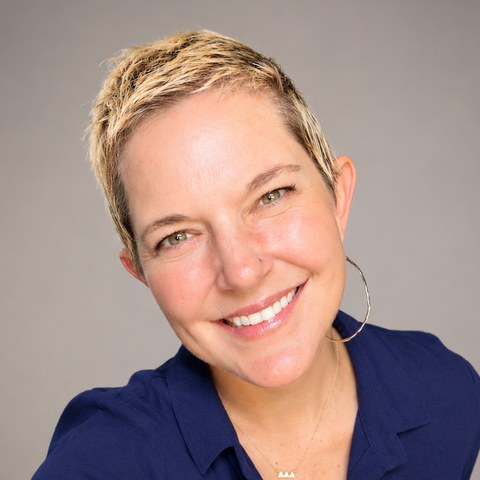
About Annie M. Henderson
Annie is a life coach, five-time author, podcast host of The Liberated Lesbian Lounge, and Expert Facilitator in RIM. She holds a BA in Psychology from Austin College and master's degrees in Education, School Counseling, and Professional Counseling. She spent 15 years in public education as a teacher and school counselor and was previously a Licensed Professional Counselor. She helps women break free from people-pleasing and build boundaries that hold, and shares this work with 118K+ followers on TikTok.
Annie is also the author of Later in Life Lesbian, Women with ADHD, Boundaries in Ink, The Liberation Year, and The Liberation Year Journal. Find her books on Amazon.