What Is RIM (Regenerating Images in Memory)? A Guide to Whole-Brain Healing
RIM, which stands for Regenerating Images in Memory, is a facilitated, body-based healing method that helps people shift emotional patterns at the level where they are stored. It works with imagery, memory, emotion, and body sensation all at once, which is why it often creates change in a single session that years of talking could not reach. As an Expert Facilitator in RIM, I want to walk you through what it is, how it works, and who it helps.
What Is RIM?
RIM was developed by Dr. Deborah Sandella, founder of the RIM Institute. It is a guided process that happens between a trained facilitator and a client. You stay awake, aware, and in charge the entire time. The facilitator guides you into your body's felt sense, where old memories and the emotions attached to them can surface and be transformed.
RIM is a facilitated experience. It is something that happens in session with a trained practitioner, and that is part of what makes it so effective. You have someone holding the space while your body does work it could not do alone.
Why I Trained in RIM
I had already been coaching for several years when I found RIM. Before that, I spent 15 years in public education as a teacher and school counselor, and I hold a BA in Psychology from Austin College plus master's degrees in Education, School Counseling, and Professional Counseling. I was watching clients do brilliant work in our sessions.
I was also noticing a limit. Some patterns kept coming back. Some women could explain their wounds in perfect detail and still wake up the next morning with the same body running the same loop. Insight was hitting a wall.
I trained for two years directly with Dr. Sandella. During training, I sat in the client chair myself. Patterns I had carried for decades shifted in a single afternoon. Memories I thought I was finished with revealed layers I never knew were there. I came out of that training a different practitioner and a different person.
How Does RIM Work?
Your thinking brain, the part that uses words and logic, is powerful. It is also where very few of your deepest patterns actually live. Those patterns are stored in the parts of the brain that handle imagery, memory, emotion, and body sensation. Those systems came online before you had language. They are faster and older than your thinking mind, which is why willpower so often loses to them.
RIM engages both systems together. That is what I mean by whole-brain healing.
- The body-based mind is where the pattern gets touched and transformed.
- The thinking mind stays present so the shift makes sense and integrates into your daily life.
When you work with only one, you tend to get partial results. Body work without integration can leave you flooded. Talk without the body can leave you informed and unchanged. RIM closes that gap.
What a session feels like
Every session is different. You are guided to notice sensations in your body and the images or memories that arise. You may revisit an early moment and experience it differently, with new resources, new understanding, and new emotional endings. Many people feel lighter afterward. Some feel tired and need rest. Most say the experience is hard to put into words.
What Does the Research Say About RIM?
For years, RIM was supported mainly by clinical case studies and the experiences of practitioners and clients. In 2025, a peer-reviewed study was published in Frontiers in Psychology by researchers at the University of Colorado working with Dr. Sandella. Using EEG brain monitoring, they measured what happened in participants' brains during a RIM session.
In this study of 30 nursing students, participants reported significantly lower depression, anxiety, and stress, plus higher motivation for self-care, after a single session. Brain activity shifted from regions associated with narrative thinking toward regions associated with intuitive, body-based processing, and then showed signs of integration across regions. Participants also described a sense of the experience being beyond words, something researchers call ineffability. The study had no comparison group, so it cannot prove RIM caused these changes, and the authors call for larger randomized trials. I break it all down in A Therapy That Feels Like Psychedelics, Without the Drugs.
That last finding matches what my clients tell me. One client wrote after her session that words could not even describe how transformational it was.
What Can RIM Help With?
In my practice, women come to RIM for patterns like these:
- Chronic people-pleasing and fear of saying no
- Shame that will not loosen, especially religious or family shame
- Anxiety and a nervous system that stays on high alert
- Grief and major life transitions, including divorce and coming out later in life
- Self-criticism and feeling not good enough
- Patterns that remain stuck after years of talk therapy
- Creative blocks and difficulty trusting yourself
Who Is RIM a Good Fit For?
RIM tends to be especially powerful for women who have already done a lot of insight work. You know your story. You can name your patterns. You might even be able to teach a class on them. And yet your body still reacts the old way.
If that sounds like you, the missing piece is often the body. Some patterns simply sit beyond the reach of talk. There is another door, and RIM is one of the most effective ways I know to open it.
RIM is a complement to mental health care. If you are in crisis or need clinical treatment, please work with a licensed mental health professional.
How RIM Fits Into My Coaching
I weave RIM together with somatic awareness, nervous system regulation, and boundary work. Coaching gives you the structure and practical tools for your daily life. RIM reaches the roots that keep pulling you back into old patterns. Together, they help women stop performing and start choosing themselves.
This article is educational content and is not medical or mental health treatment. If you are in crisis or need clinical care, please contact a licensed professional.
Common Questions About RIM
What does RIM stand for?
RIM stands for Regenerating Images in Memory. It is a facilitated, body-based healing method developed by Dr. Deborah Sandella that works with imagery, memory, emotion, and body sensation to transform emotional patterns.
Is RIM the same as hypnosis?
RIM works differently from the way most people picture hypnosis. You stay awake, aware, and in control throughout the session. A facilitator guides you to notice body sensations and images while you remain fully present and able to speak.
How many RIM sessions do I need?
Many people notice meaningful shifts after a single session. Some choose a series of sessions to work through several patterns. Your facilitator can help you decide what fits your goals.
Is there research on RIM?
Yes. A 2025 peer-reviewed EEG study published in Frontiers in Psychology found that 30 nursing students reported lower depression, anxiety, and stress and higher motivation for self-care after a single RIM session, along with measurable shifts in brain activity. The study had no control group, so larger trials are needed.
Can RIM be done online?
Yes. RIM sessions can be facilitated by video, which allows clients to work from the comfort and safety of their own space.
Curious what RIM could shift for you?
Book a session with Annie, Expert Facilitator in RIM.
Book a Session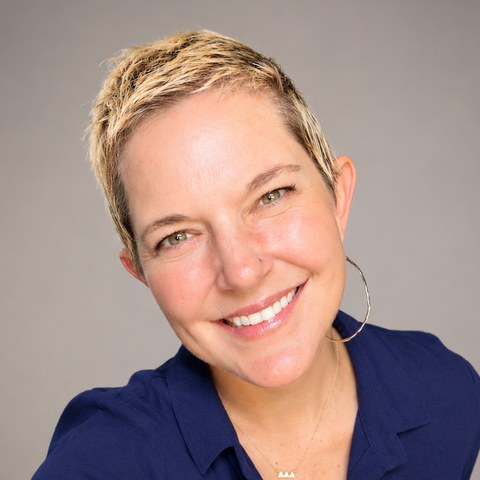
About Annie M. Henderson
Annie is a life coach, five-time author, podcast host of The Liberated Lesbian Lounge, and Expert Facilitator in RIM. She holds a BA in Psychology from Austin College and master's degrees in Education, School Counseling, and Professional Counseling. She spent 15 years in public education as a teacher and school counselor and was previously a Licensed Professional Counselor. She helps women break free from people-pleasing and build boundaries that hold, and shares this work with 118K+ followers on TikTok.
Annie is also the author of Later in Life Lesbian, Women with ADHD, Boundaries in Ink, The Liberation Year, and The Liberation Year Journal. Find her books on Amazon.